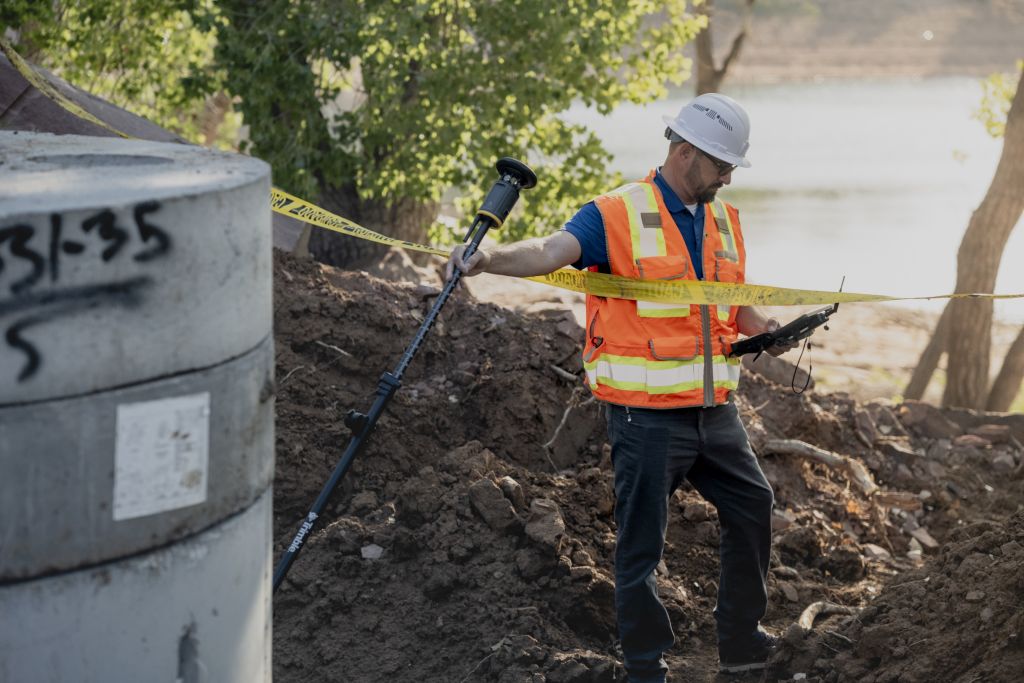
Trimble has launched the Trimble ST30 smart target, a new surveying system that integrates optical tracking and subscription-based GNSS functionality into a single device. The company says the ST30 sets a new standard for traceability, redundancy, versatility and safety, introducing tilt compensation and automatic rod height measurement. The device was showcased at Intergeo 2026 in Munich this September.
The ST30 combines a 360-degree prism, an IMU, a GNSS receiver and automated rod height functionality in a single rugged device, giving surveyors the flexibility to switch between optical and GNSS techniques within the same workflow. It integrates with Trimble's S-, RTS- and SPS-series robotic total stations, as well as Trimble Access, Trimble Siteworks, Trimble FieldLink and Trimble Business Center software, and is aimed at topographic surveys, stakeout, as-built verification and cadastral work.
"The Trimble ST30 smart target enhances what's possible from a surveying system. It delivers a transformative field experience by ensuring uninterrupted productivity and accuracy with robust, reliable total station tracking," said Boris Skopljak, senior vice president, geospatial at Trimble. "With optical and GNSS tilt compensation, automated rod height and integrated GNSS, users can reduce costly errors and work safely in more hard-to-access areas."
The ST30 introduces a patented three-pillar tracking system designed to maintain a continuous lock on the target, along with enhanced active tracking to help prevent false locks from reflective surfaces and target ID to keep the total station following the assigned target. Trimble GeoLock GNSS-assisted technology is built in to help quickly regain a lost lock. Integrated high-accuracy GNSS will be available as a separate subscription beginning in 2027. The device is built from ultra-rugged magnesium and aluminum with a protective top bumper and shielded LEDs for challenging job-site conditions, including wet environments.
Scott Crozier, senior vice president, civil construction at Trimble, said the device's rugged design and automated features "increase confidence on the job and reduce the potential for human error, which is particularly beneficial for an industry facing increased complexity, shorter deadlines and tighter tolerances."